Tuesday, April 18, 2017

EP 030 Ben Joffe

Ben Joffe is a scholar of Vajrayana Buddhism, currently finishing his PhD at the University of Colorado, Boulder. On this episode, we talk about his first career as a teenaged tarot reader, the question of how Vajrayana and tantra have been impacted by the Tibetan diaspora and encounter with the global monoculture, the role of the ngakpa (non-celibate yogi), and Ben's translation of Dr. Nida Chenagtsang's books on traditional Tibetan medicine.

We experienced some technical difficulties during the recording of this episode. While the quality of the sound may be poor in some places, it is more than compensated for by the high quality of the guest.


Saturday, March 18, 2017

EP 029 B Alan Wallace

Today, I talk with B. Alan Wallace about his multiple careers as Buddhist contemplative and teacher, physicist and cognitive scientist, writer and translator. We discuss his road to becoming a monk and returning to laity, the meditative practices of Dzogchen, how to tell a good teacher (by the quality of their students), the remarkable career of Dudjom Lingpa, and how Buddhist contemplatives and neuroscientists can collaborate to effect a revolution in our understanding of the mind.


Bio

Dynamic lecturer, progressive scholar, and one of the most prolific writers and translators of Tibetan Buddhism in the West, B. Alan Wallace, Ph.D., continually seeks innovative ways to integrate Buddhist contemplative practices with Western science to advance the study of the mind.

Dr. Wallace, a scholar and practitioner of Buddhism since 1970, has taught Buddhist theory and meditation worldwide since 1976. Having devoted fourteen years to training as a Tibetan Buddhist monk, ordained by H. H. the Dalai Lama, he went on to earn an undergraduate degree in physics and the philosophy of science at Amherst College and a doctorate in religious studies at Stanford.

With his unique background, Alan brings deep experience and applied skills to the challenge of integrating traditional Indo-Tibetan Buddhism with the modern world.

Follow-up Q&A

After the interview went live, I received some additional questions from listeners that Dr. Wallace was kind enough to respond to:


  1. When talking about Dudjom Lingpa you mentioned that a teacher’s level of realization is hard to determine and that you had to judge by the realization of the students. Wouldn’t that be equally hard to determine?You can tell a lot from the conduct of the students, and of course this applies to teachers as well.
  2. What is the best daily practice for a beginner at meditation or someone who can only do a little each day? Shamatha is a good start, then branch out to the four immeasurables and the four applications of mindfulness.
Show Notes

Alan Wallace's website


Thursday, March 02, 2017

La Fabrica

Architect Rocardo Bofill has been transforming an old cement factory, La Fabrica into a residence and workspace for the past 45 years. Spoiler: It's gorgeous.


(via Carl Wykaert)

Sunday, January 22, 2017

EP 028 Max Gladstone

Today, I talk with Max Gladstone, author of The Craft Sequence, in which a magical post-Apocalyptic society turns out to be not a terribly bad place to live, thank you very much. He describes his novels differently depending on who he's talking to. For businesspeople, lawyers, and consultants, he says, "It's just like your job, only with wizards." Like many writers, he's held a number of interesting and out-of-the-way jobs, as you can see from his bio below:
Max Gladstone is a two-time finalist for the John W Campbell Best New Writer Award, and a one-time finalist for the XYZZY Award. In July 2016 Tor Books published his most recent novel, FOUR ROADS CROSS. Other novels in the CRAFT SEQUENCE include, LAST FIRST SNOW, a tale of zoning politics, human sacrifice, and parenthood.  LAST FIRST SNOW is the fourth Craft Sequence novel, preceded by THREE PARTS DEAD, TWO SERPENTS RISE, and FULL FATHOM FIVE.

Max studied Chan poetry and late Ming dynasty fantasy at Yale; he lived and taught for two years in rural Anhui province, and has traveled throughout Asia and Europe. He speaks Chinese, can embarrass himself reading Latin, and is a martial artist, fencer, and fiddler. He’s also worked as a researcher for the Berkman Center for Internet and Policy Law, a tour guide for the Swiss Embassy, a go-between for a suspicious Chinese auto magazine, a translator for visiting Chinese schoolteachers, a Chinese philosophy TA, a tech industry analyst, and an editor. He has wrecked a bicycle in Angkor Wat, sung at Carnegie Hall, and been thrown from a horse in Mongolia.
We recorded this conversation at pretty much the exact moment the Trump/Russia dossier hit the Internet. Before the conversation began, I asked Max if he'd like to discuss politics or current events. We ended up not talking politics until after we'd ended the interview. Missed opportunities.


He's also written a volume in the Bookburners project, currently available for free here:

If you enjoyed this episode, go to iTunes to subscribe, rate and review this podcast. This helps others find this podcast, and helps us to produce more of what you want. Thanks.

Monday, December 12, 2016

EP 027: Mitch Horowitz and the Secret History of America

Today on Startup Geometry, I talk with Mitch Horowitz, editor, voiceover artist, historian of alternative religion and the occult, and author of Occult America and One Simple Idea: How Positive Thinking Reshaped Modern Life. We discuss the influence of experimental religions have had on American history, our favorite uncanny tourism sites, how the belief that "thoughts are causative" has affected the real world, and why having a Definite Chief Aim can help you achieve it.


Tuesday, September 13, 2016

Links for Later 9-13-16

  1. Newly discovered galaxy Dragonfly 44 is 99% dark matter, was first discovered using telephoto camera lenses.
  2. A drill instructor put a Muslim recruit in a clothes dryer repeatedly at Camp Lejeune
  3. Based on the recommendation of Tyler Cowen and Michael Orthofer, I picked up a copy of Arno Schmidt's Bottom's Dream. It's a really big book. Will let you know when I start reading it.

Tuesday, September 06, 2016

EP 026: Gordon White

This week I talk to Gordon White, former "weird kid", proprietor of the popular Rune Soup podcast and blog. Gordon is also a documentarian, world traveler, digital strategist and practicing magician. He's the author of three books that came out in the last year or so: Star.Ships, which we discuss in this podcast; The Chaos Protocols, which takes a heterodox view of how to handle the post-financial crash economy; and Pieces of Eight, a personal history of the Chaos Magic movement.


This interview has a twin over on Gordon's podcast, where he interviews me about the Bruno books.You can listen to that over on Rune Soup or on iTunes.


Due to technical difficulties (or spiritual interference) the original media file for this episode dropped out after the intro. Please download again now that the media file has been replaced. If there are still difficulties, please let me know in the comments or on Twitter. -Scott


Episode Outline, Notes and Links

Tuesday, August 30, 2016

Startup Geometry EP 025 Robert Pool on Peak Performance

Robert Pool is a mathematician, science writer, and, together with Anders Ericsson, the author of Peak: Secrets from the New Science of Expertise. Today, we talk about the use of deliberate practice to improve physical and mental performance, why the 10,000 hour rule isn't what you think it is, the relationship between talent and success (it's less important than you think, what good mental representations will do for you, and why taste is essential to the development of expert skills.


Wednesday, August 17, 2016

Startup Geometry EP 024: Cory Doctorow

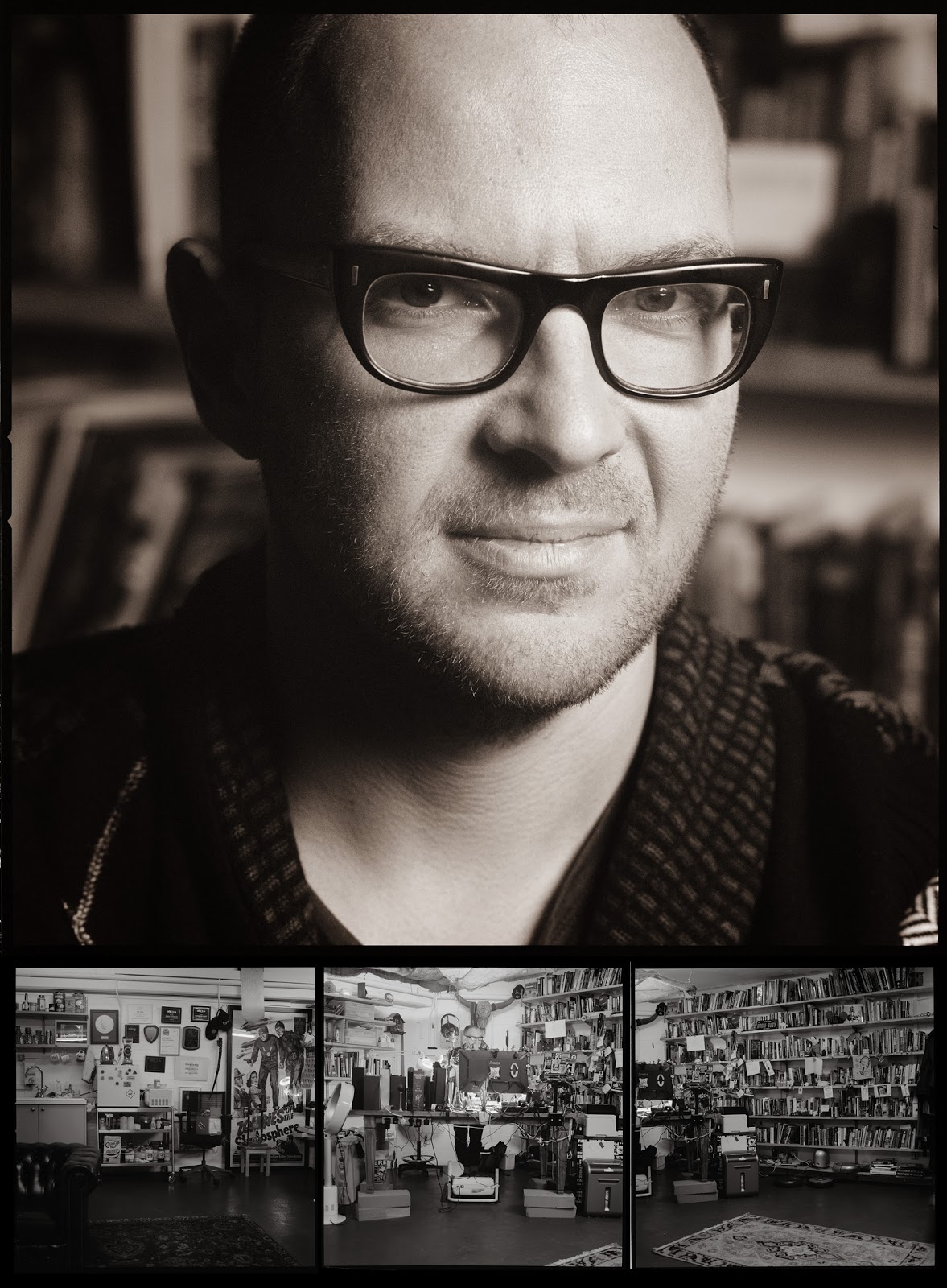
Cory Doctorow is a bestselling author of both science fiction and techno-sociological nonfiction, one of four editors of longtime popular weblog boingboing, and an activist and advocate for intellectual property rights, working extensively with the Electronic Freedom Foundation and others to put control of content back in the hands of the users like you and me.

Photo credit: Jonathan Worth 2013
Today, we talk about the EFF's plan to defeat Digital Rights Management (DRM) as a business model of rent-seeking corporations. DRM is the set of digital locks on the content you buy--everything from eBooks to your car's computer have DRM embedded--and while it isn't impossible to break, it is highly illegal for you (or anyone) to do so. That means you don't have control of things that you bought. It also means that security flaws cannot always be researched or revealed. That's a big problem.

We also talk about how he became a writer and how he gets his writing done despite a punishing travel and speaking schedule. Spoiler: 250 words a day, every day will result in a finished product very quickly. That's one page per day. You can do that, can't you?

Show Links and Notes
EFF
The EFF on the DRM lawsuit
Bunnie Huang on the DRM lawsuit

boingboing
Cory's website, craphound.com
The flashbake version control tool

Cory's books include:

Tuesday, July 26, 2016

Mariana Gosnell's Lost and Found Photos

My aunt Mariana "Sere" Gosnell died three years ago, after a long and exciting life. For many years, she worked for Newsweek, primarily working as an editor in the Science and Medicine section. She was also a world traveler, pilot, photographer and wonderful human being. This spring, Deborah Acosta, a reporter for the New York Times, called to tell me that she'd found a cache of Aunt Sere's pictures outside of a storage facility in New York. Here's the story of how she tracked down the owner of these pictures and the reason they had been cleaned out of the storage space. More here

Friday, July 15, 2016

EP 023 Kevin Kelly

Kevin Kelly spends a lot of time thinking about the future. He once spent six months imagining that he only had six months to live (and keeps a timer on his own life expectancy), and co-founded the Long Now foundation, built around the idea of a 10,000 year clock to promote very long term thinking. His current book, The Inevitable: Understanding the Twelve Technological Forces that will Shape Our Future, deals with the future that is happening now, the ongoing future, the one William Gibson says is already here, just not evenly distributed yet. He is the co-founder and current Chief Maverick of Wired, and is a prolific writer, publisher, photographer and founder of group projects, including the Cool Tools book and website, The Silver Cord, a crowdfunded graphic novel about angels, and the Quantified Self meetups.

Today, we talk about how to think about the future, why people choose personalization over privacy, what it might mean to look through someone else's eyes for a day, and why the artificial intelligences in your future won't be what you expect.


Saturday, July 09, 2016

EP 022 Michelle Warnky on Overcoming Obstacles

Michelle Warnky is the owner of Movement Lab Ohio, a competitor in obstacle races and a traceusse de  parkour (a parkour freerunner). You can see her on American Ninja Warrior, where she's one of a small group of successful repeat competitors, and you can learn how to be a ninja in your own life at her gym.


Today, we talk about her experience as an English teacher in Kazakhstan, how to develop the skills you need to move your body through obstacles, and how she's balanced her roles as solo competitor, teacher and business owner.

Monday, July 04, 2016

George Saunders Goes To A Trump Rally

Who are all these Trump supporters?

He wings it because winging it serves his purpose. He is not trying to persuade, detail, or prove: he is trying to thrill, agitate, be liked, be loved, here and now. He is trying to make energy. (At one point in his San Jose speech, he endearingly fumbles with a sheaf of “statistics,” reads a few, fondly but slightingly mentions the loyal, hapless statistician who compiled them, then seems unable to go on, afraid he might be boring us.)

And make energy he does. It flows out of him, as if channeled in thousands of micro wires, enters the minds of his followers: their cheers go ragged and hoarse, chanting erupts, a look of religious zeal may flash across the face of some non-chanter, who is finally getting, in response to a question long nursed in private, exactly the answer he’s been craving. One such person stays in my memory from a rally in Fountain Hills, Arizona, in March: a solidly built man in his mid-forties, wearing, in the crazy heat, a long-sleeved black shirt, who, as Trump spoke, worked himself into a state of riveted, silent concentration-fury, the rally equivalent of someone at church gazing fixedly down at the pew before him, nodding, Yes, yes, yes.

Wednesday, June 08, 2016

Alejandro Jodorowsky at the British Library


In conversation with Iain Sinclair, following a screening of Jodorowsky's Dune. Get up and make some art.